


Parking Lot Update
Our parking lot improvements are complete for now! The cones will be removed soon, and the lot will be safe to drive on.
Please be aware that there will be a temporary lip or bump in the pavement for approximately the next month while the new pavement settles. The paving crew will then return to apply the final top coat and level the surface.
We will share an additional update once the final paving work has been scheduled.
Thank you for your patience and understanding while we complete these improvements!
Connecting Individuals with Disabilities to their Communities
Individuals with disabilities and their families work with Community Bridges to manage their unique challenges, maneuver the obstacles, and thrive in their communities.
For over 35 years, Community Bridges has provided the tools and support to individuals with disabilities so they become welcomed and active contributors to our community, making it a better place for everyone!
Our individual approach is focused on creating the best life possible for every individual we serve. From early childhood through all phases of life, people experiencing developmental disabilities or injuries have an advocate and caring partner to help them utilize their skills and talents to live a productive and rewarding life that they choose for themselves.

Person Centered Thinking
Person-centered thinking is a set of values, skills, and tools used in the planning and personalization of services used by people who need supports offered by Community Bridges. Even more than that, it is a philosophy that helps to enable positive control and self-direction of people’s lives.
Community Bridges implements person-centered thinking through training sessions offered to and required of all employees. Teaching and supporting the use of person-centered thinking skills assures that service plans will be used and acted on, that updating service plans will occur “naturally,” and that the person’s ability to lead a fulfilling, independent life is fully supported. Person-centered thinking harmonizes with our mission and provides a framework for our services that support individuals and families in their communities.
Accessibility & Language Access
Community Bridges is committed to ensuring meaningful access to our programs, services, and information for all individuals, including those with disabilities and those with Limited English Proficiency (LEP). We take reasonable steps to support effective communication and provide accommodations and language assistance at no cost, in accordance with applicable federal requirements.
Community Bridges is committed to providing equal services and does not discriminate based on race, sex, color, pregnancy, religion, disability, age, veteran status, sexual orientation, marital status, or any other legally protected status. If you believe that a representative of Community Bridges has discriminated against you while acting in their official capacity, you have the right to file a complaint by contacting the Department of Health and Human Services Office of the Ombudsman at Ombudsman@dhhs.nh.gov or by calling (603) 271-6941, or toll-free (800) 852-3345.


Stay up-to-date on news and events happening at Community Bridges and in your community.
Click here to sign up for our newsletter emails.
In Our Community
Developmental Services Rules Open for Public Comment
The New Hampshire Bureau of Developmental Services has opened the formal public comment period for proposed changes to He-M 526, He-M 527, He-M 528, and He-M 529.
These rules address designated receiving facilities within New Hampshire's developmental services system, including facility designation, admission and discharge, conditional discharge, and transfers between facilities.
Individuals, families, providers, and other interested community members are encouraged to review the proposed rules and participate in the public comment process.
Learn more by visiting our Call to Action Page.

Concord Housing and Redevelopment Authority Waitlist Update
The Concord Housing and Redevelopment Authority (CHRA) has announced that its Public Housing and Section 8 Housing Choice Voucher waitlists are currently closed.
CHRA will post updates on its website when the waitlists reopen.
Individuals and families seeking housing assistance are encouraged to visit the CHRA website for the most current information regarding waitlist status and available housing programs.
We will share additional updates as they become available.

ABLE NH, with support from NH Medicaid Matters, recently published an easy-to-use toolkit to help people with disabilities and their families understand the new Medicaid work requirements.
Click on the image to the left to view the entire document.
Family Support Council Summer Events
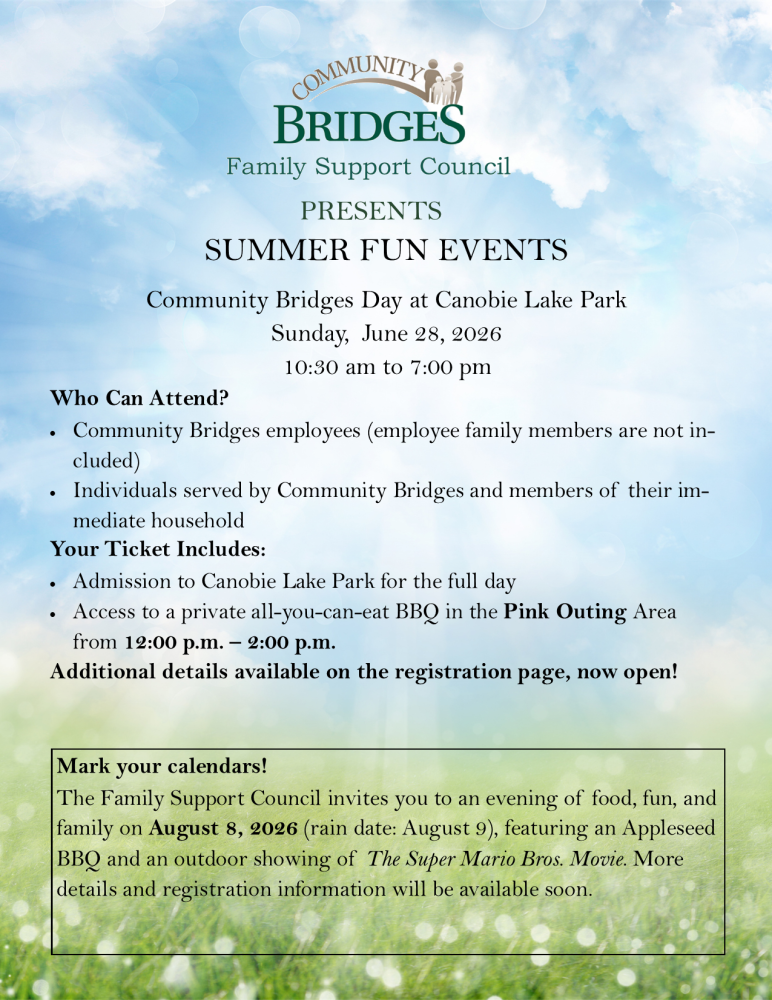
The Family Support Council is excited to offer two opportunities for Community Bridges families to connect, have fun, and enjoy time together this summer!
Community Bridges Day at Canobie Lake Park
Sunday, June 28, 2026 | 10:30 a.m. – 7:00 p.m.
Join us for a day of rides, games, and family fun at Canobie Lake Park. Community Bridges employees and individuals served by Community Bridges, along with members of their immediate household, are invited to attend.
Admission includes a full day at the park and an all-you-can-eat BBQ served in the Pink Outing Area from 12:00 p.m. to 2:00 p.m.
Save the Date: Outdoor Movie Night & BBQ
Saturday, August 8, 2026 (Rain Date: Sunday, August 9, 2026)
Join the Family Support Council for an evening of food, fun, and family connection. Guests will enjoy an Appleseed-catered BBQ beginning at approximately 6:30 p.m., followed by an outdoor screening of The Super Mario Galaxy Movie at approximately 8:00 p.m.
Additional details and registration information will be available soon.
Community Bridges President & CEO Search
Community Bridges is seeking a mission-driven, strategic leader to serve as our next President & CEO. This individual will guide the organization into its next chapter while building on a strong foundation of service, advocacy, and community engagement for individuals with developmental disabilities, acquired brain disorders, and their families.
The executive search is being led by Career Management Associates (CMA). Interested candidates can view the full position profile and application information using the links below:
LinkedIn: https://lnkd.in/ehQJxZeM
Indeed: https://www.indeed.com/viewjob?jk=8f693d8320aa46e0&from=shareddesktop_copy
Please help us share this opportunity with qualified candidates in your networks.
 Community Bridges announces the planned retirement of its President and CEO
February 23, 2026, Concord, NH
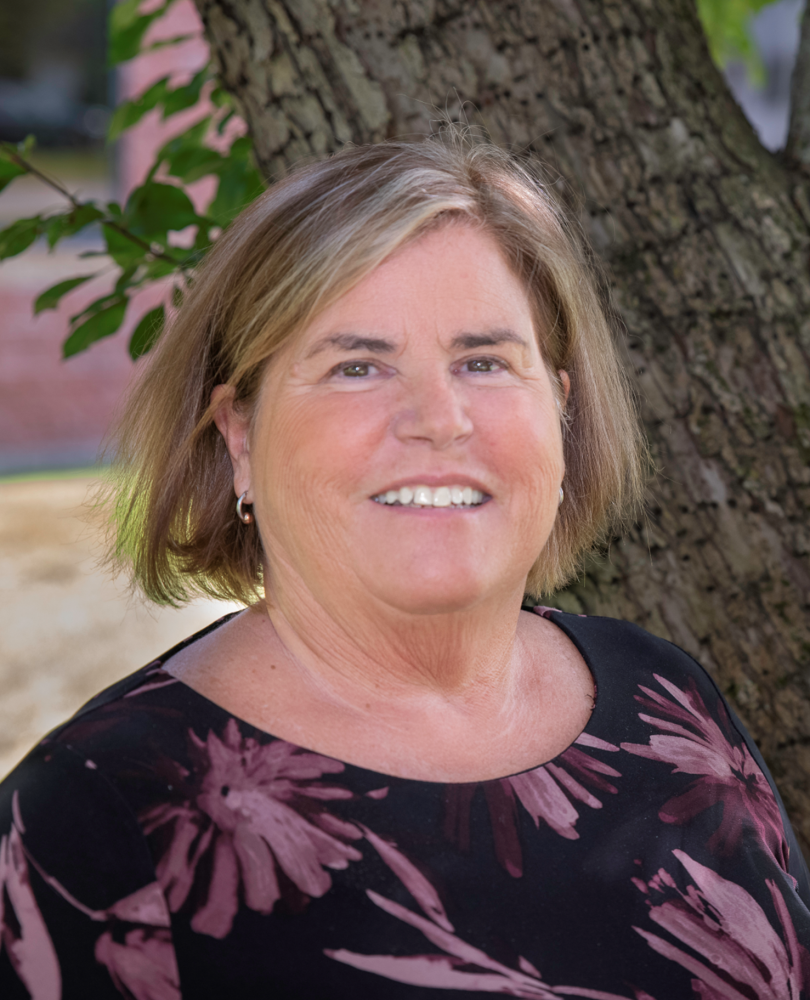
The Community Bridges’ Board of Directors announces today that Ann Potoczak, President and CEO of Community Bridges will retire in November. To ensure a smooth and intentional transition, Ann will continue in her role full-time through the search and selection process, working closely with the Board and the leadership team to support operations, the search for a new CEO, and the transition of responsibilities. The Board has hired Career Management Associates to lead the search for her successor.
Ann’s tenure with Community Bridges began 40 years ago, when the State of New Hampshire was changing its practice from institutionalizing people with disabilities in Laconia State School to creating systems of integration and interdependence of people with disabilities in schools, homes, and communities.
“Ann was Community Bridges’ 15th employee, beginning her work with the agency as a case manager in 1986.” says Betsy McNamara, Board Chair. “Ann has spent her entire career dedicated to ensuring people with disabilities live lives of their own design fully integrated into the community of their choosing. She has done so through roles that were increasingly complex and responsible, culminating in becoming President and CEO in 2019. The throughline of her career has been dedication to the individuals served by Community Bridges and its employees. We are grateful for her leadership and commitment.”
“I have loved being a part of the lives of the people we serve and their families,” says Ann. “Community Bridges client’s range in age from infants to elders and we are there for them throughout the lifespan. The strength of the families we support, and the dedication and expertise of our staff inspire me every day.”
Community Bridges’ Board of Directors has established a Transition Committee and contracted Career Management Associates to lead the search for its next President and CEO. Those interested in learning more about the position may email recruiting@cmacareer.com.
Community Bridges leadership team and day-to-day operations will remain unchanged during the transition period.
With gratitude,
The Community Bridges Board of Directors
About Community Bridges. Located in Concord, NH, Community Bridges serves 1,200 people with disabilities and their families while employing 490. Community Bridges assures and maintains the integration, growth, and interdependence of people with disabilities in their home communities, so they have positive control over the lives they have chosen. Community Bridges is a leader in the development of and advocacy for innovative approaches in supporting families.